What are the Guidelines
for Marriage Celebrants?
Categories: | Celebrant | Wedding Legals |
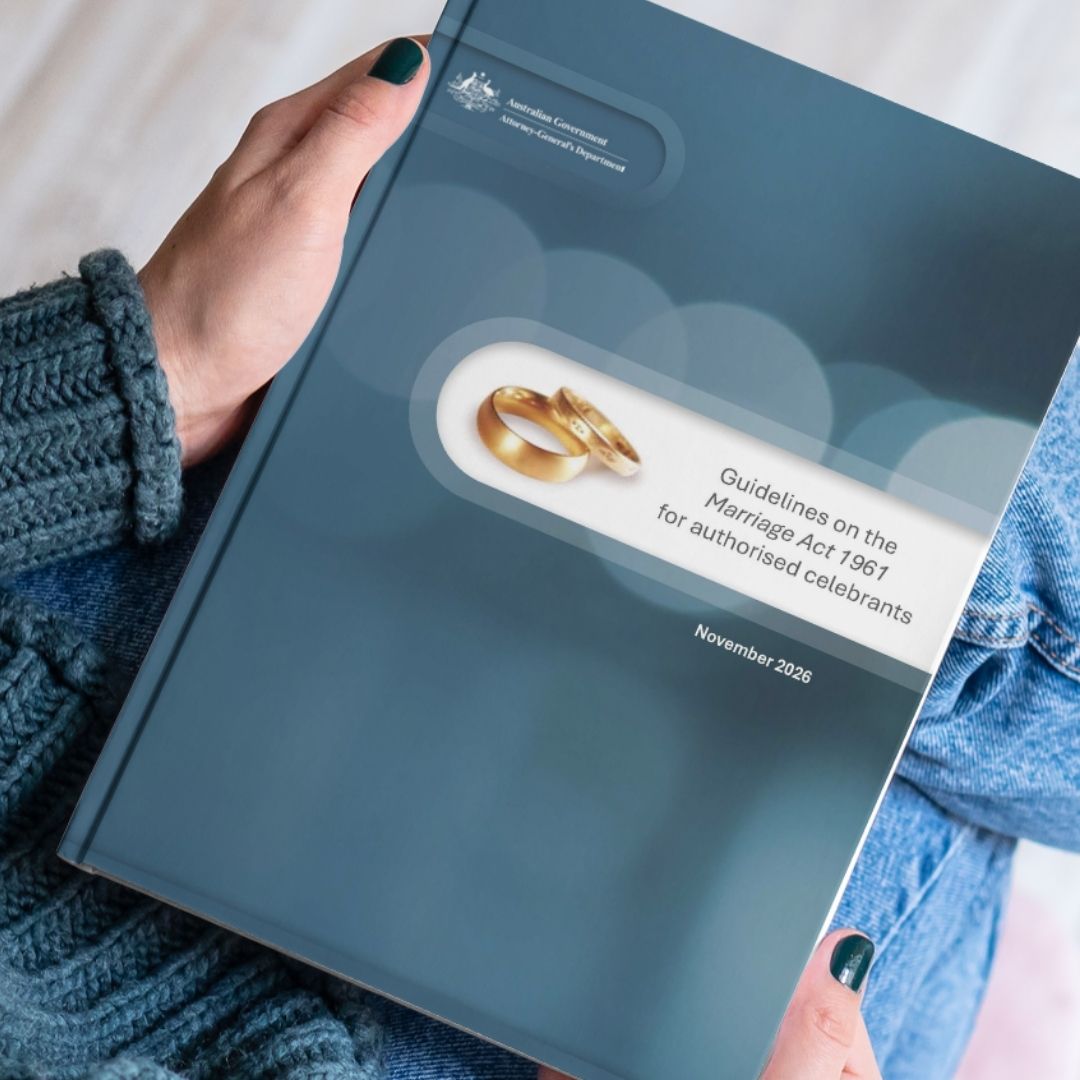 You may have noticed a bit of
excitement among celebrants this week, with many
celebrants commenting on the release of the latest
edition of the Guidelines on the Marriage Act
1961 for Authorised Celebrants. And
some even suggesting that the Guidelines (2026) now
give permission to marrying couples to make personal
vows before as well as after they say the
legal vows, when earlier editions prescribed after
the vows, only.
So what are the Guidelines, what do they do, and where do they fit into the complex tapestry of legal frameworks that work behind the scenes to ensure that your marriage is legal and recognised and that the ceremony that creates your marriage ticks all the legal boxes?
The Purpose of the
Guidelines
out
- The Marriage Act 1961 forms the legal bedrock upon which all marriages in Australia are built.
- The Guidelines on the Marriage Act 1961
for Authorised Celebrants
play a pivotal role in supporting celebrants by
clarifying what the Attorney General's
Department considers to be best practice.
Relationship to the
Marriage Act 1961 and The Marriage Regulations 207
out
- The Marriage Act 1961 is the cornerstone of marriage law in Australia. It is the legislation that sets out the legal requirements for marriage. It covers who can marry, what paperwork is required, how marriages should be solemnised, and the legal age of marriage, among other stipulations. And it can only be amended by Parliament
- The Marriage Regulations 2017 supplement the Marriage Act by providing additional details together with procedural requirements. It does not require a vote in Parliament to enable it to be amended. Amendments do, however, reflect changes in the legislation.
- The Guidelines are a practical
complement to these legal documents. Neither
prescriptive nor enforceable in their own
right, they exist to clarify the legal
requirements and provide advice to help
celebrants navigate the Marriage Act.
Thanks for reading!