Your DNA: How much does it
count when marrying in Australia?
/08
by Jennifer
Cram - Brisbane Marriage Celebrant © 15 January
2026Categories: | Wedding Legals |
It might shock you to learn this, but DNA
doesn't come into the picture for most people
getting married in Australia. It's what's on your
birth certificate that counts.
There's a simple legal reason for this. It's
called legal presumption of parentage.
Presumption
of Parentage
The
The law says a person
is the child’s biological mother if they are named
as the mother on the birth or adoption certificate.
The law says a person is the child's biological
father if:
- they are named as the father on the birth or adoption certificate
- they acknowledge they are the father by providing a statutory declaration or affidavit
- they were married to the child's mother at the time of birth
- the child was born within a defined period after the parents lived together
All other relationships, including prohibited
relationships (those people you are banned from
marrying) flow on from this.
Evidence
The
When a child is
born, the hospital is responsible for issuing a
certificate as to who you are (name, date of birth,
where you were born, presumed parents, and who
witnessed/attended the birth. The information on
this certificate is what is entered in your birth
record. Where a child is born in other
circumstances, for example home birth or in the back
of an ambulance, documentary evidence is still
required.Most people are confident who their mother is. Though in days gone by it wasn't uncommon for an unmarried woman to check into the maternity ward pretending to be her married sister, record keeping that lies behind Medicare, for example, makes that less likely. But that's not to say that registering a birth is plain sailing in every instance.
Adoption
The
Parent
Unknown or Left Blank on your Birth
Certificate
The
There are a number of reasons
why a parent (usually the father) is not recorded on
your birth certificate- Parent is genuinely unknown
- Parent was/is known but did not legally and
formally acknowledge that they are the parent
- Your parents were not married
- Your parents did not meet the de facto
requirements
What does
this mean for Your Marriage Certificate?
The
Occasionally I have a
couple getting married where one of them is
confident that they know who their "real" father is.
Usually because they have been told by family
members. Who could, not to put too fine a point on
it, be wrong, or even deliberately lying. Even if you are confident you know who your father is, unless you have a determination from a court of law, generally based on DNA testing that complies with the regulations outlined in the Family Law Act 1975. you cannot have your birth certificate amended. And, unless the name appears on your birth certificate, it cannot be recorded on your marriage certificate.
What
does this mean for who you can or cannot
marry?
Th
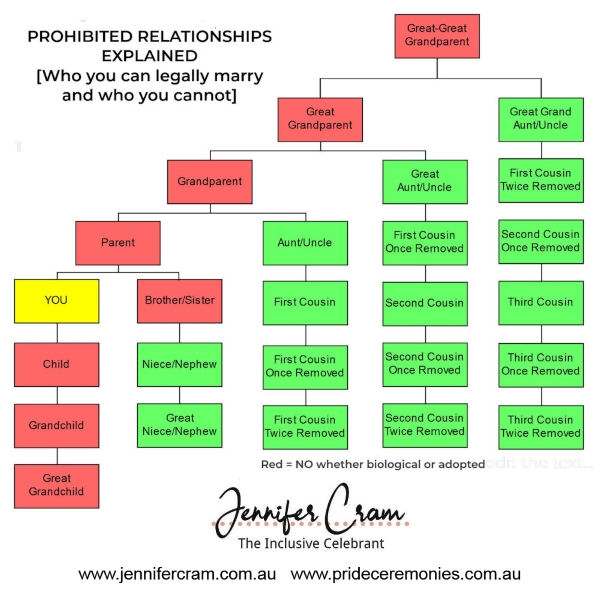 Actually
quite simple. You can't marry anyone who is your legal
ancestor or sibling, and any child you have had.
Actually
quite simple. You can't marry anyone who is your legal
ancestor or sibling, and any child you have had.Anyone else is okay. So you can marry your first cousin, even though in many countries you can't. And you can also marry your uncle, aunt, regardless of whether they are a sibling of one of your parents or an unrelated aunt or uncle by marriage. And you can marry your nephew.